
Where did all the new diamond cuts come from?
New vs old.
In the last few years, it seems that many new and bold shapes of diamonds have suddenly appeared on the market. Where have they come from, and why haven’t they been seen before?
The truth is, all of these shapes have been available for years. The shapes were just not easy to cut from natural mined crystals when the cost of the natural rough crystal was so high. A cutter had to decide on the pros and cons of shapes that would appeal to more people and thus sell quicker or shapes that would retain weight and save the cutter money.
Now, with laboratory grown rough crystals, also knows as lab-grown diamonds, the cost of the crystal is low enough so that unusual shapes can be cut to meet almost anyone’s taste. Sizes that may not have been readily available in natural crystals are now very possible. With lower starting costs, cutters can experiment more freely.
Just to be clear…
The different cuts now on the market are not about durability or beauty; it was more about having the right crystals, the right size and demand for something different.
What are some of the new and unusual cuts now available?
Let’s start with the Dutch Marquise. This cut is long and slender like a regular brilliant cut marquise, but has six distinct sides. It is available as a brilliant cut or step cut.
A brilliant cut follows the basic pattern of the modern round brilliant cut with 57 facets that are adjusted for the shape while the step cut is made of far less facets that are arranged more like the rungs of a ladder (hence step cut) and follows the look more of an emerald cut.
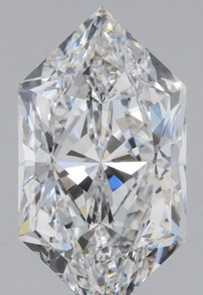
Above is the brilliant cut version.
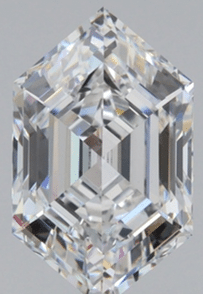
Above is the step-cut version.
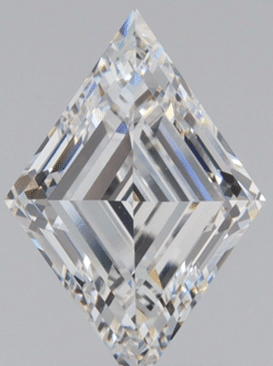
Another interesting cut that was rarely seen in natural diamonds is the lozenge cut seen in the image above. While it may be available in brilliant cut patterns, I haven’t seen one yet.
While the Dutch marquise is a form of a hexagonal cut, the true “hex” cut has its six sides equal in length. And again, it is available as a brilliant or step cut version.
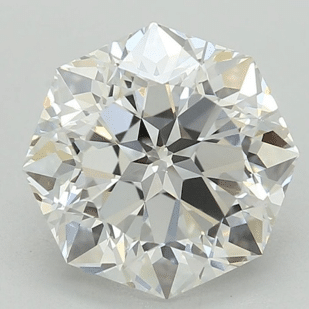
Above is the brilliant hex cut.
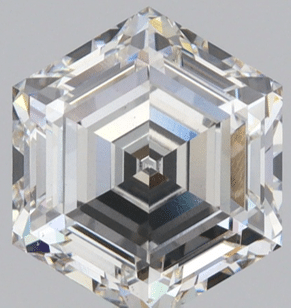
Above is the hex step cut.
Is it a marquise? Is it an oval? No, it’s a moval. This cut is basically a very long ratio of oval. It has the long ratio of a marquise cut but with soft ends more like the oval cut. I have seen it in a brilliant cut as well as a blend of a facet pattern that more closely resembles an antique cut.
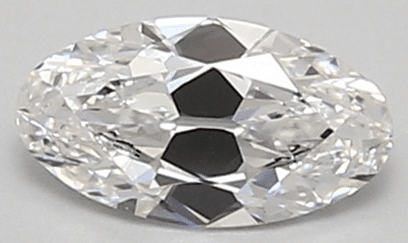
Above is the moval with facets that are more typical of antique cuts.
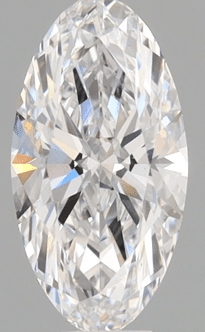
Above is the brilliant cut moval.
Another cut that has been available is the Portuguese cut. This cut has roughly triple the number of facets of a round brilliant cut. To achieve this, the diamond usually is much greater in depth than a normal brilliant round cut. The result is an unusual visual pattern but a diamond that looks smaller than the weight suggests. In other words, a two-carat Portuguese cut would look the same size as a 1.5-1.7 carat round brilliant cut diamond.
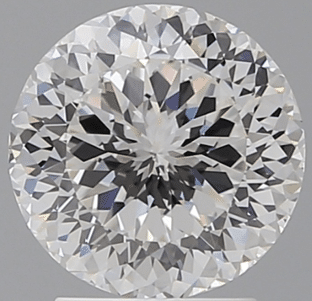
Above is the Portugese cut.
For those who like very geometric patterns that are elongated, the kite-shaped step cut shown at the below, may be appealing.
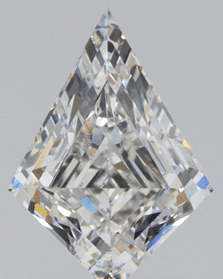
Due to the reduced cost of the rough starting material, shapes in sizes rarely seen in natural mined diamonds are now available.
Add to all the different styles the throwback to antique cuts. These follow patterns that may not have been used since the early 1900’s or earlier.
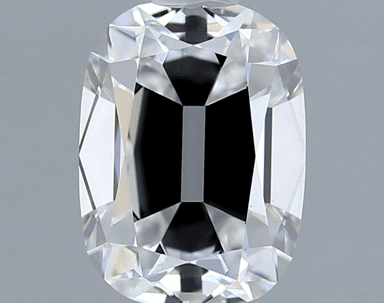
Below is an antique elongated cushion cut, that is often referred to as an old mine cut, and is very reminiscent of the diamond in Taylor Swift’s engagement ring.
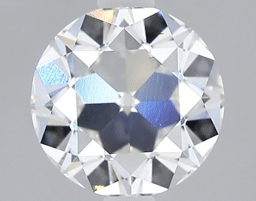
Below is an an old European cut.
What diamond cuts are possible?
If you wanted diamonds to be cut in the shapes of animals, letters of the alphabet, famous buildings and even profiles of some celebrities, it is possible.
This diversity of diamond cut shapes has also opened up the possibility of designs that only a few years ago would have been virtually impossible or prohibitively expensive.
Come see many of these in our showroom at Troy Shoppe Jewellers in Calgary. We carry the largest selection of unique diamond cuts in Calgary.